
SECURITY THAT WORKS FOR YOUR BUSINESS
Door Closers Geelong | Installation, Repair & Adjustment
Commercial door closer installation, repair, adjustment and maintenance across Geelong, the Bellarine Peninsula and Surf Coast. We assess the door, closing action and existing hardware before recommending suitable work.
Qualified, licensed and fully insured
COMMERCIAL · FLEET LOCKSMITHS
On this page
Door closers Geelong: describe the closing problem
A commercial door that slams, stops short of its frame or becomes difficult to use needs assessment of the whole arrangement. Fleet Locksmiths can inspect suitable door closers and associated hardware for businesses across Geelong, the Bellarine Peninsula and Surf Coast. Explain what has changed and whether the entrance currently latches and can be secured. This page covers door closer installation, repair, adjustment and maintenance. If the closer is missing or a new installation is required, our door closer installation and replacement service assesses the door and appropriate replacement hardware before the work is agreed.

Describe the behaviour in normal use
Tell us whether the problem occurs each time the door is used or only under particular conditions. Note whether the door moves smoothly, catches on the frame or stops before the latch engages. If an authorised staff member can safely demonstrate the fault, arrange for them to meet the locksmith. A clear symptom report is more useful than assuming a particular adjustment screw needs turning. We inspect the actual closer, arm arrangement, fixings and related door components before explaining suitable work. Different products and installations have different requirements.

Check the doorway rather than blaming one component
A closer acts alongside the hinges, latch, strike, door and frame. A new or adjusted closer cannot automatically solve every problem elsewhere in that assembly. Tell us about recent changes to seals, flooring, handles or the entrance, because these may affect operation. We assess appropriate hardware and identify whether the issue concerns closer operation, physical resistance or another fault. If additional door or building work is needed, it should be distinguished from servicing the closer. This keeps the repair decision grounded in what is actually preventing normal closing.

Avoid trial-and-error adjustment
Adjustment points and supported functions vary between closer models and mounting arrangements. There is no universal setting that suits every door. Avoid repeatedly changing controls or loosening fixings without understanding the equipment and application. Tell us if someone has already altered the settings or removed parts, and keep any product information available. We assess the condition and suitable servicing options before making recommendations. The aim is controlled operation for the actual doorway, not simply increasing or reducing one setting until a symptom appears to disappear.
Explain visible damage or signs of deterioration
Report a loose body, damaged arm, missing fixings or visible fluid around the unit where observed. Photographs can help show the concern, but a visual enquiry does not establish the internal condition or whether a particular repair is possible. Keep people clear of damaged hardware and arrange assessment rather than continuing to force the door. We explain whether suitable servicing, replacement components or a new closer should be considered. A worn or damaged installation should not be assumed serviceable because it can still move the door occasionally.
Assess servicing against the existing equipment
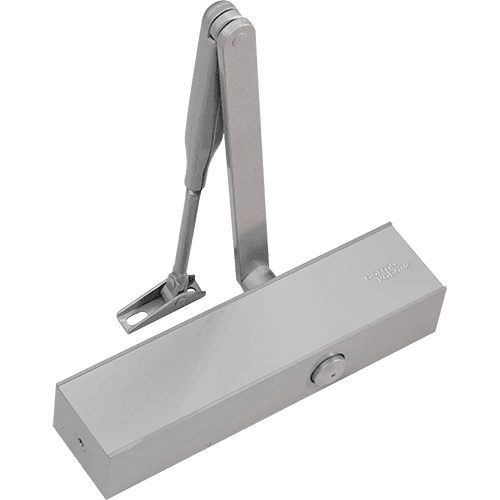
A service enquiry should identify the closer brand and model if visible, the mounting arrangement and the problem experienced by users. Product examples on this page are illustrations, not a promise that every model suits every application or that all parts are available. We check the actual unit and appropriate information before confirming the scope. Retaining a suitable closer may be practical where its condition and installation permit, while a failed or unsuitable unit may require replacement. The reason for the recommendation should be explained as part of the quote.
Identify special door applications before work
Tell us if the entrance is identified as a fire door, exit door or another special application, and provide available labels, schedules or relevant written requirements. We need to assess the actual assembly and documentation before agreeing hardware changes. An ordinary closer or adjustment is not automatically suitable for every such door. Do not assume that a product photograph or general website description establishes the requirements for the premises. Where a separate responsible party or specialist must be involved, establish that arrangement before the work is approved.
Plan the visit around the business
Nominate an owner or authorised manager to approve the work and a contact who knows how the door behaves. Explain trading hours, restricted areas and whether the entrance must remain in use. If the door cannot be secured, state that clearly when requesting assistance. We confirm current availability, access and the proposed scope rather than promising the same completion time for every installation. Keep relevant keys available so the latch and locking action can be checked as part of the agreed assessment.
Keep a useful maintenance record
A brief record of recurring problems can help distinguish a new issue from a previous repair. Note the date, what staff observed and any known changes to the door or its surroundings. Retain invoices, product details and instructions after servicing so future enquiries can refer to the actual equipment. Staff should report slamming, incomplete latching or loose components rather than compensate by forcing the entrance each day. The appropriate maintenance arrangement depends on the door and its use; we discuss what has been assessed and any further work identified.
Record useful observations between service visits
Give staff a consistent way to report a door problem. A short note identifying the entrance, time and observed behaviour can be more useful than an instruction that the closer needs tightening. Include whether the door failed to latch, moved unexpectedly quickly or caught on something visible. Tell the authorised manager about damage or loose parts rather than continuing to compensate for the fault. Keep previous service records available so the next assessment can distinguish a recurring symptom from a recent change. The appropriate response should follow inspection, not an assumed adjustment based on a brief message.
Test the agreed result at handover
After work, observe the door operating in its normal position and check the agreed latching and locking functions. Have the authorised contact understand any changes and the limits of the completed scope. If a separate hinge, frame or latch problem remains, record it and arrange the appropriate follow-up. Ask about owner guidance for the selected equipment instead of assuming another site’s settings apply. A clear handover helps the next staff member recognise whether the entrance is functioning as expected or needs further attention.
Request an adjustment or maintenance assessment
Call Fleet Locksmiths on 1800 00 3533 with your location, photographs of the closer and doorway, visible model information and a description of the fault. We are qualified, licensed and fully insured, with more than 13 years of locksmith experience and MLAA membership. Our mobile service confirms the proposed work, parts, pricing, travel and current availability for your booking. If assessment indicates that the closer needs replacing, we explain that separately and direct the enquiry to a suitable installation plan rather than assuming every unit can be repaired through adjustment.
For broader business access, see commercial locksmith services. Call 1800 00 3533 or request an assessment with your door photos.
Need help with this service?
Call for urgent assistance, or send a quote request with your vehicle or property details. We will confirm the supported work, an upfront quote and availability before booking.
BEFORE YOU BOOK
Your questions,
answered.
Talk to your local locksmith for practical advice.
Can every slamming door be fixed by adjustment?
No. We assess the closer, mounting and the complete doorway. Damage, resistance, unsuitable hardware or a separate latch or hinge problem may require a different remedy. The appropriate work depends on the actual condition and application.
What should I photograph for a maintenance enquiry?
Show the closer body, arm or rail, mounting area and the complete doorway where safe. Include visible product markings and describe when the fault occurs. Do not dismantle the equipment to obtain photographs.
Should staff keep changing the closer settings?
Avoid trial-and-error changes. Controls and supported functions differ by model and installation. Tell us about adjustments already attempted so we can assess the current condition and appropriate servicing or replacement options.
What if the door is a fire or exit door?
Identify that when booking and provide available labels, schedules and relevant written requirements. The actual assembly and application need checking before changes are agreed; a generic product or adjustment does not establish suitability.
Where do I enquire about a missing or replacement closer?
Use our door closer installation service for a new installation or replacement assessment. This commercial maintenance page focuses on existing equipment, fault reporting and suitable adjustment or servicing, with work confirmed after inspection.
YOUR LOCAL GEELONG LOCKSMITH
Your keys. Your property. Sorted.
Home, business or vehicle — call your local Fleet.